Why does my nose get so oily?
Understand common triggers and build a gentle reset for hot, humid days.
Read article →A brand knowledge graph connects approved facts, entities, evidence, products, questions, and relationships in a structured layer. Lumenario turns that graph into a searchable, brand-owned knowledge destination with articles, FAQs, visual explainers, and connected topic collections.

Mystiqare turns specialist skincare knowledge into a destination organized around real questions, concerns, ingredients, climates, and routines—not a chronological company blog.
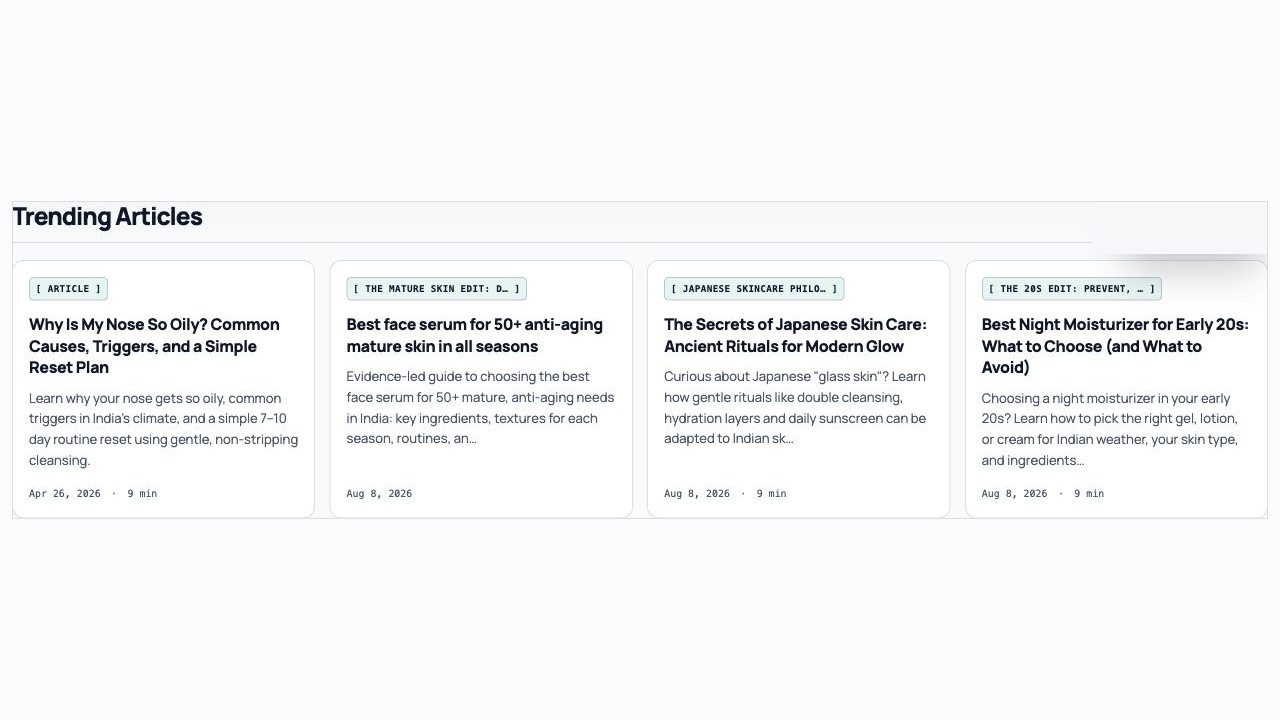
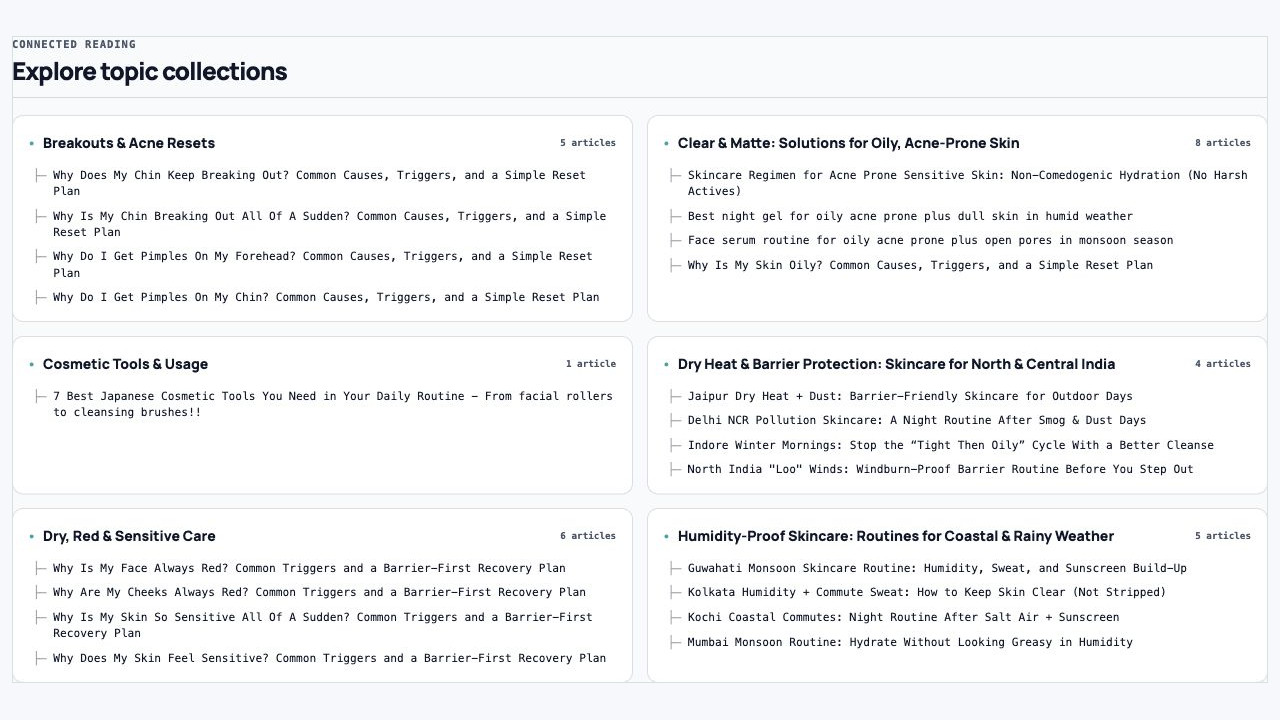
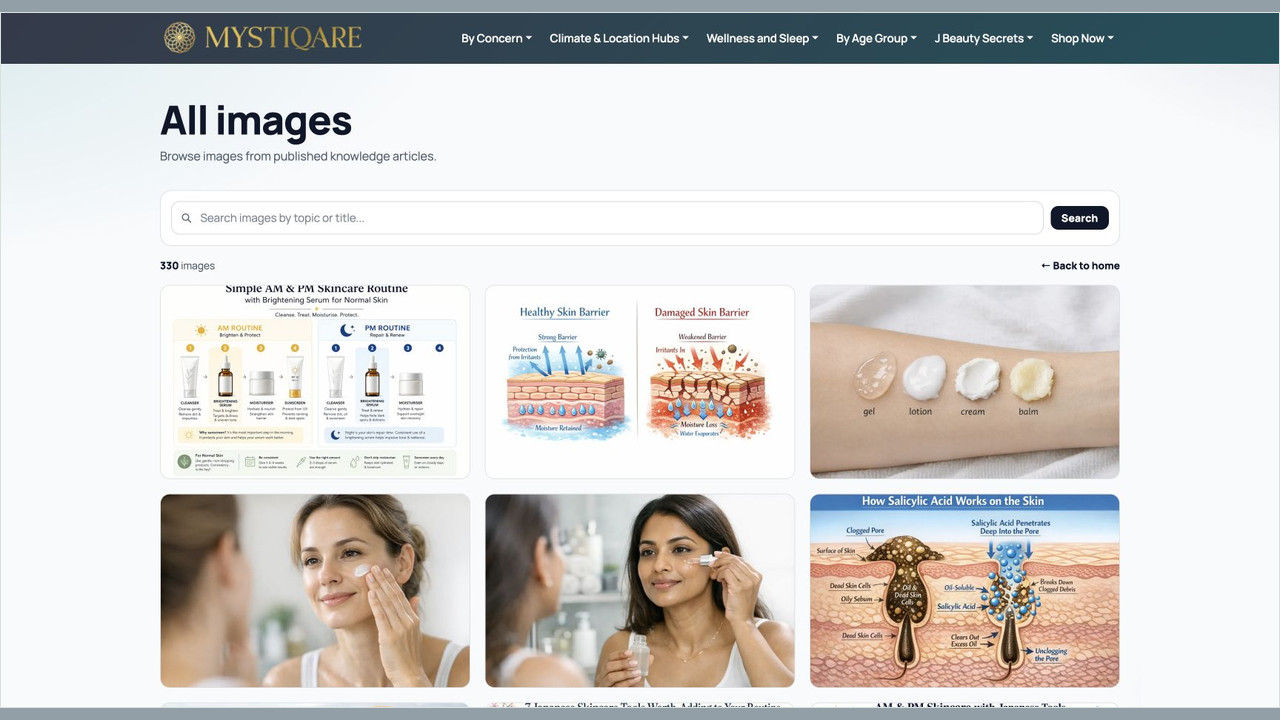
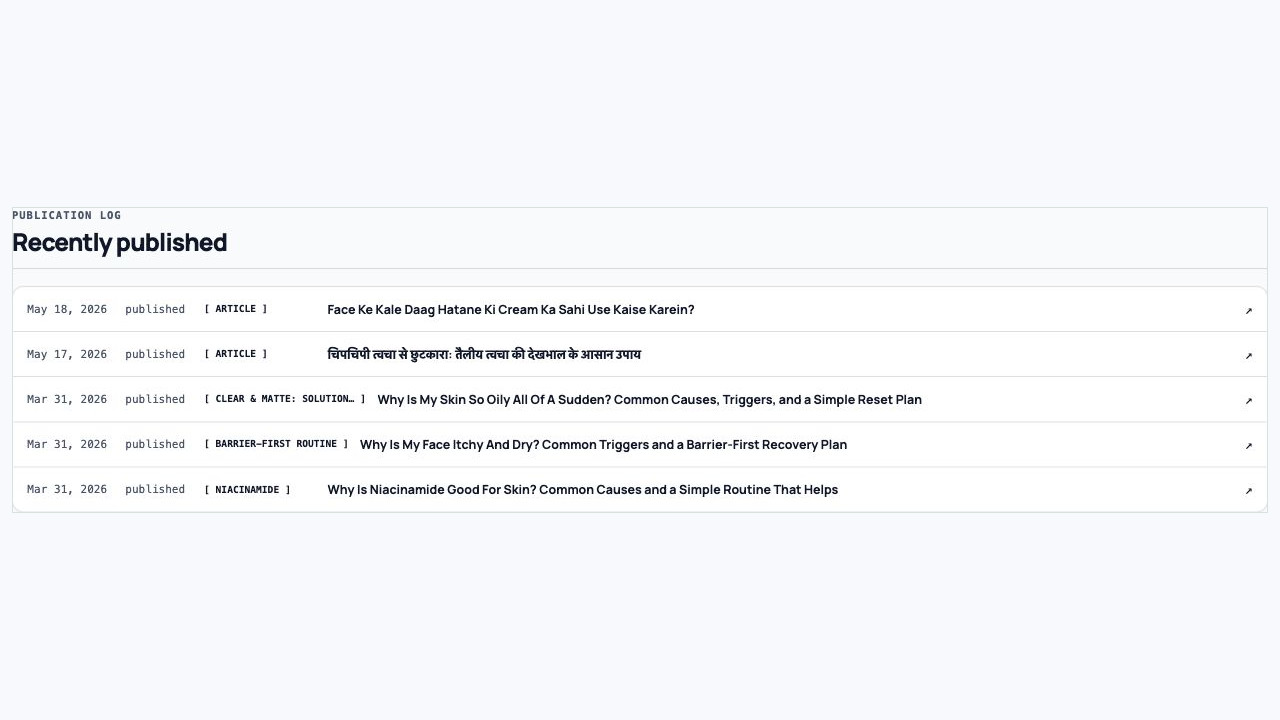
The Hub organizes knowledge around what people need to understand. Every format becomes part of a connected path that search engines and AI systems can interpret too.
Search across articles, FAQs, guides, and topics instead of digging through a chronological archive.
Related questions form guided knowledge paths around products, problems, audiences, and use cases.
Deep guides, concise FAQs, and visual explainers provide the right depth for each decision.
New evidence, questions, and performance signals continually expand and refresh the library.
The Brand Knowledge Hub is what customers and AI systems explore. The Brand Knowledge Base is the controlled engine that determines what the Hub can say, why it can say it, and when that knowledge must be reviewed.
One approved source record can support every relevant answer without losing its evidence or operating context.
Lumenario turns scattered product documents, evidence, positioning, and policies into an AI knowledge base of approved records—complete with provenance, permissions, ownership, and review dates.
Knowledge is structured for retrieval without severing it from the evidence and decisions that make it trustworthy.
Lumenario does not hand over an empty CMS. The autonomous workforce identifies what the category needs, turns approved knowledge into useful answers, connects the library, and learns from performance.
Find unanswered questions and missing category coverage.
Structure subjects, entities, facts, and relationships.
Validate claims, sources, permissions, and ownership.
Release answers and place them in useful topic paths.
Use discovery and performance signals to improve the Hub.
Lumenario measures where an answer is supported by distinctive, brand-owned knowledge—and identifies the source material required to make generic areas more specific and credible.
A stronger score means the Hub can draw on specific product facts, evidence, experience, and positioning—not information any competitor could publish.
Give buyers direct answers, deeper learning paths, and evidence they can inspect before making a decision.
Give answer engines structured, attributable, interconnected information they can understand and cite.
Preserve approval, provenance, ownership, and continuous improvement as the public library grows.
Start with one priority topic. Lumenario will map the available evidence, identify missing knowledge, and turn approved expertise into a connected library of answers.